ABOUT US
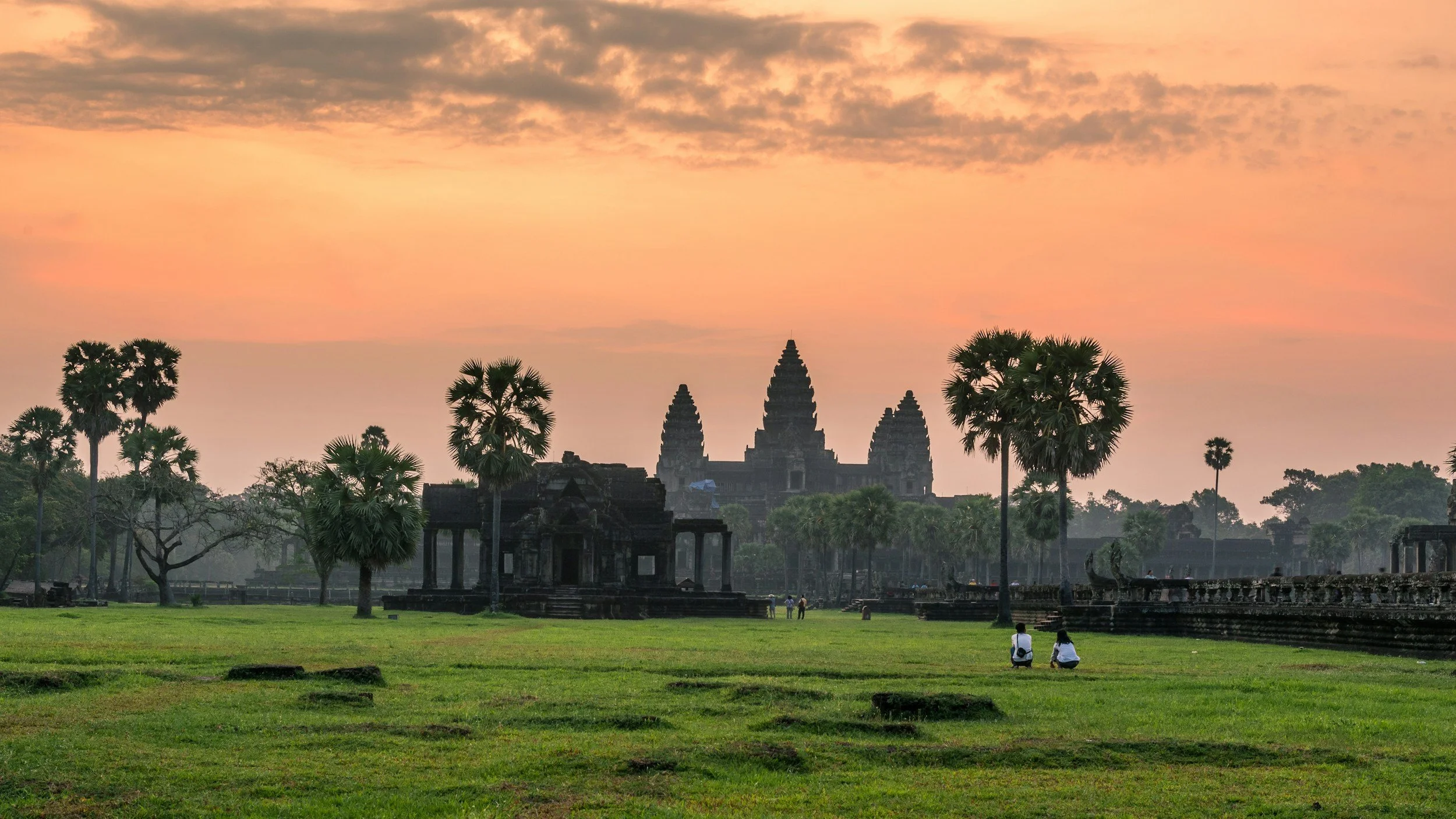
In Siem Reap, before the heat lifts, women walk the temple causeways with armloads of jasmine, lotus, frangipani, and rumduol. The flowers are placed at the feet of Buddha figures, slipped between the toes of apsara reliefs, set on altars older than any European cathedral. By evening they are gone — swept up, composted, or returned to the moats.
This has been the rhythm at Angkor for a thousand years.
Khmere Angkor began with a question. What if those flowers — chosen, blessed, gathered each morning by the hundreds of thousands — were not the end of a fragrance, but the beginning of one?
Our Work
We are a small house. Our distillery sits on a half-acre lot in Siem Reap, ten kilometres from the western moat of Angkor Wat. The work is done by Cambodian hands. Our partners on the temple flower routes are families who have made these offerings for generations; the flowers we extract are gathered with their permission and to their schedule, never against it.
What enters our stills is what the temples release.
We use traditional fractional distillation and modern solvent extraction, side by side. We do not perfume on industrial timelines. A single batch of rumduol absolute — the flower of the apsara, sacred to Khmer poetry, native to the lowland forests that ring the city — takes three weeks from harvest to filtration. We make no apology for the pace.
The Garden
The plant lexicon of Cambodia is older and stranger than the world's perfumery tradition has recognised. Sandalwood from Pursat. Frangipani from the limestone outcrops of Battambang. Lotus harvested at first light from the Tonle Sap floodplain. Champa, ylang, the resinous black cardamom of the Cardamom range. And rumduol — Sphaerocoryne affinis — Cambodia's national flower, banana-soft on the nose, almost commercially absent from the global fragrance trade.
We have built a small garden of cultivars beside the distillery. We are bringing back, slowly, what the colonial trade routes passed over.
Why This
A perfume is not a story. It is a substance. But the substance has a history, and the history is worth keeping.
Khmere Angkor exists because the materials are here, the craft is here, and the people who know the flowers are here. Everything else — the bottles, the boxes, the words — follows from that.
We work in small batches. We do not list ingredients we cannot trace. We do not claim properties we cannot demonstrate. We make perfume, oil, and incense from Cambodian botanicals, in Cambodia, by Cambodians, on the route walked daily to the temples.
That is the company.
Begin Your Refined Wellness Journey
Submit the brief form below; a member of our advisory team will respond promptly to craft a program attuned to your goals.